How Florida Weather Affects Your Garage Door
Florida homeowners know how intense the climate can be. Between high heat, heavy humidity, salty coastal air, and seasonal storms, your garage door works hard every day to protect your home.
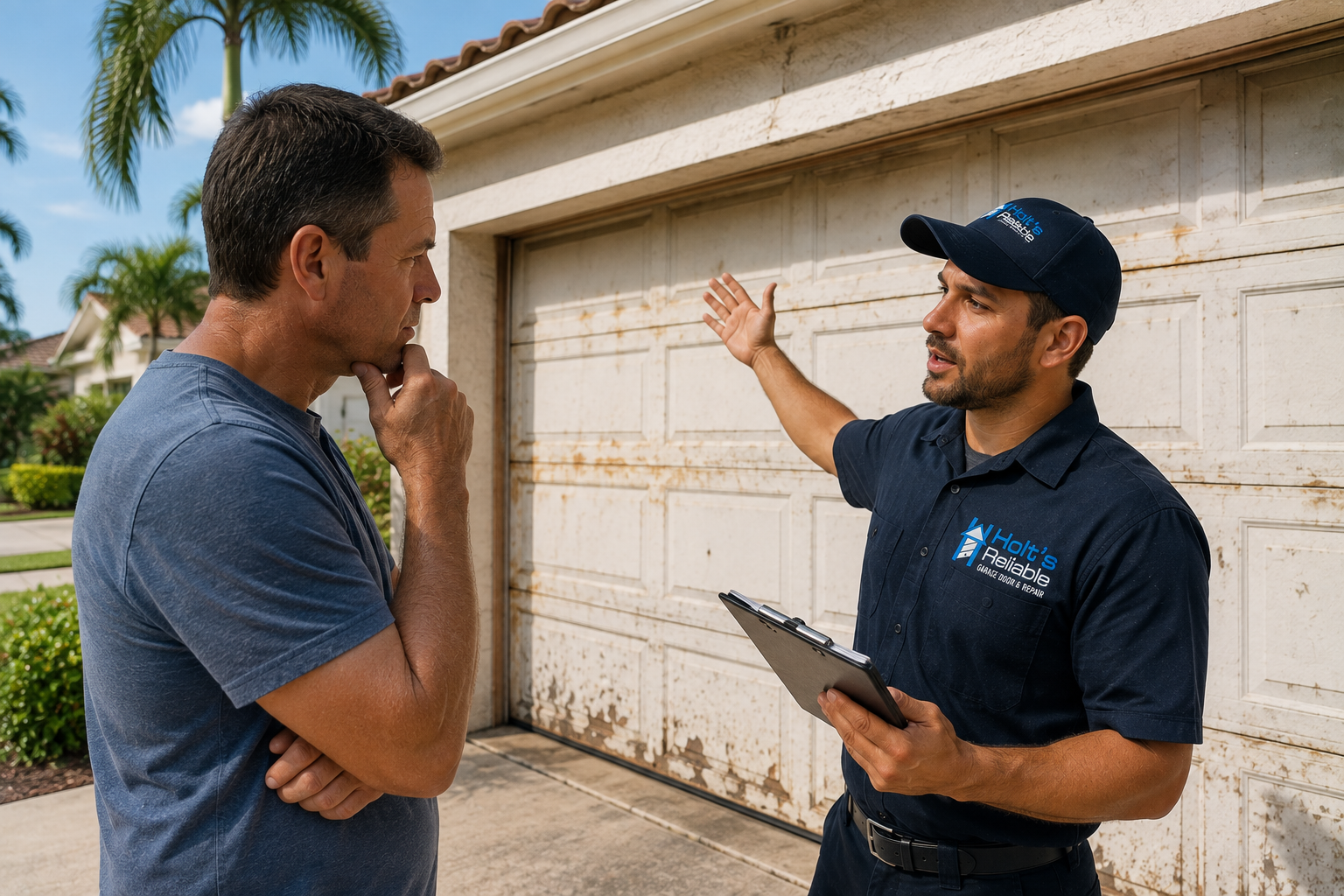
While most garage doors are built to last, garage doors Florida weather conditions can create problems faster than many homeowners expect. Without proper garage door maintenance, heat and moisture can lead to fading, rust, warping, noisy operation, and other common garage door issues.
Your garage door is more than a moving panel. It supports home security, curb appeal, energy performance, and daily convenience. That is why understanding how Florida weather garage doors react over time can help you prevent costly repairs.
At Holt’s Reliable Garage Door Repair, we help homeowners protect their garage doors from Florida weather garage doors challenges year-round. Whether you are dealing with sun damage, humidity, corrosion, or garage door storm-related wear, knowing what to watch for can make a big difference.
Why Florida Weather Is Tough on Garage Doors
Florida weather is a mix of extreme conditions. The combination of direct sunlight, moisture, wind, salt air, and sudden storms can affect both the outside of your garage door and the internal parts that help it operate.
During summer, garage doors can absorb intense heat for hours. This may cause thermal expansion, fading, material stress, and problems with opening or closing smoothly.
Humidity is another major concern. Moisture can lead to garage door weather issues such as rust, mold, mildew, swollen wood, weakened hardware, and noisy operation.
For homes near the Treasure Coast, North Palm Beach, Port St. Lucie, Stuart, Jensen Beach, Vero Beach, Hobe Sound, and Fort Pierce, salty coastal air can make the problem worse. Salt can speed up corrosion, especially on metal hardware, garage door springs, tracks, and hinges.
The good news is that many common garage door issues caused by Florida weather can be prevented. With regular garage door inspections, proper lubrication, quality materials, and timely garage door repairs, your garage door can perform reliably throughout the year.
Weather Effects on Different Garage Door Materials
Different materials respond to heat, sun, and humidity in different ways. Understanding how garage doors Florida weather conditions affect each material can help you choose the right door and maintain it properly.
Some metal doors may expand in high temperatures, while wood can swell or crack in humid conditions. Vinyl may resist moisture well, but prolonged UV exposure can still cause color fading over time.
If your door starts sticking, making noise, looking uneven, or showing visible wear, the material may be reacting to the weather. These signs are often early warnings of garage door weather issues that should not be ignored.
Vinyl Garage Doors
Vinyl garage doors are popular because they are durable and low maintenance. They resist moisture well, which makes them a practical option for Florida homes exposed to humidity and coastal air.
Unlike wood, vinyl is less likely to warp or rot when exposed to moisture. This makes it a smart choice for homeowners who want Florida weather garage doors that require less frequent upkeep.
However, vinyl can still be affected by long-term sun exposure. Some vinyl doors may experience UV fading, especially if they are not made with protective coatings.
To reduce sun damage, choose a high-quality vinyl garage door with UV-resistant protection. Routine cleaning can also help preserve the surface and keep your door looking fresh.
Steel Garage Doors
Steel garage doors are known for strength, security, and long service life. They are a popular choice for homeowners who want a durable garage door that can stand up to daily use and harsh weather.
A well-built steel door can offer strong protection during storms and may help improve garage insulation when properly insulated. This makes steel one of the most practical options for many Florida weather garage doors.
However, steel is a conductive material, which means it can absorb and transfer heat quickly. During Florida summers, steel garage doors can become hot to the touch and may contribute to warmer garage temperatures.
Heat can also cause expansion, which may lead to sticking, alignment problems, or doors that do not close correctly. These are common garage door issues that often need professional adjustment.
Steel can also rust if its protective coating is damaged or if the door is exposed to salty coastal air. Regular garage door inspections can help catch rust and corrosion before they spread.
Aluminum Garage Doors
Aluminum garage doors are lightweight and naturally resistant to rust and corrosion. This makes them a strong option for coastal Florida homes where humidity and salt air are constant concerns.
Because aluminum is lighter than steel, it may place less strain on the opener and hardware. It can also work well for modern designs, especially when paired with glass panels or sleek finishes.
Although aluminum handles moisture well, it can still expand in extreme heat. This may cause minor warping, alignment issues, or difficulty opening and closing if the system is not maintained properly.
Aluminum can also dent more easily than heavier materials. For homes in storm-prone areas, it is important to choose a quality door designed for Florida weather garage doors performance.
Wood Garage Doors
Wood garage doors offer a beautiful, classic look that can enhance curb appeal and add warmth to your home’s exterior. Many homeowners choose wood for its custom appearance and timeless style.
However, wood is more vulnerable to Florida’s heat and moisture than many other materials. When it comes to garage doors Florida weather concerns, wood requires more maintenance to stay in good condition.
Humidity can cause wood to swell, while heat and sunlight can lead to cracking, warping, or fading. If the wood is not properly sealed, moisture can also create rot or mildew problems.
To protect a wood garage door in Florida, choose treated wood and maintain a regular sealing or refinishing schedule. Routine garage door inspections are essential for preventing weather-related damage before it becomes expensive.
How Florida Weather Affects Internal Garage Door Components
The exterior garage door panels are not the only parts affected by Florida weather. Heat, humidity, and salt air can also damage internal garage door components such as garage door springs, rollers, garage door hinges, garage door cables, and tracks.
These parts are responsible for smooth and safe operation. When they wear down, you may notice noise, shaking, slow movement, or other common garage door issues.
Because many components are made of metal, moisture and salt exposure can increase the risk of rust and corrosion. Over time, corrosion can weaken parts and affect the entire system.
If your garage door is becoming louder, heavier, or harder to operate, the problem may not be the garage door panel itself. It may be one of several garage door weather issues affecting the moving parts.
Garage Door Springs
Garage door springs help counterbalance the weight of the door. They are essential for safe opening and closing because they reduce the amount of force needed to move the door.
In Florida’s heat, metal springs can expand slightly and experience added stress. Over time, this can reduce tension and contribute to spring wear.
Humidity and salty air can also cause spring corrosion. Rust weakens the metal and may shorten the life of the springs, creating a serious safety concern.
Because springs are under extreme tension, they should only be inspected or replaced by trained garage door professionals. If you suspect a spring problem, do not try to repair it yourself.
Door Lubrication
High temperatures can break down lubricants faster. When lubrication becomes less effective, the moving parts of your garage door experience more friction and wear.
Poor lubrication can cause squeaking, grinding, or jerky movement. These sounds are often early signs of garage door weather issues caused by heat and moisture.
Using the right lubricant helps rollers, garage door hinges, tracks, and other moving parts work smoothly. A silicone-based or garage-door-specific lubricant is usually better than oil-based products, which can attract dirt and grime.
Regular lubrication can reduce noise, protect hardware, and help prevent common garage door issues. However, garage door springs and high-tension parts should be handled by garage door professionals.
Rollers and Hinges
Rollers and garage door hinges help guide the door as it opens and closes. When heat, humidity, and corrosion affect these parts, the door may become noisy or unbalanced.
Metal rollers can wear down faster when lubrication breaks down. Increased friction between rollers and tracks may cause grinding sounds or uneven movement.
Garage door hinges can also shift or become misaligned when the door expands from heat. This can create sticking doors, warped movement, or extra strain on the opener.
If rollers, garage door hinges, or tracks are damaged, the door may come off track or stop working safely. These are common garage door issues that should be repaired quickly by a garage door professional.
How to Prevent Garage Door Damage From Florida Weather
Florida weather can be harsh, but damage is not always inevitable. With routine garage door maintenance, your garage door can handle heat, moisture, and storms more effectively.
The best way to prevent problems is to inspect your door regularly and act quickly when something looks or sounds unusual. Small garage door weather issues can become major repairs if ignored.
A professional garage door tune-up can help identify hidden wear, loose hardware, rust, failing weatherstripping, and poor alignment. This is especially important for homes exposed to coastal humidity and frequent storms.
Lubricate Moving Parts Regularly
Humidity and heat increase friction in metal components. To reduce wear, apply a quality garage door lubricant to rollers, garage door hinges, and tracks as recommended.
Avoid heavy grease or oil-based lubricants because they can collect dirt and debris. Over time, buildup can make common garage door issues worse.
For garage door springs and high-tension components, call a garage door professional. These parts can be dangerous, and safe handling requires the right tools and training.
Prevent Mold and Mildew
High moisture levels can create the perfect environment for mold and mildew. This is especially common in shaded areas, corners, seals, and crevices where moisture collects.
Clean your garage door surface regularly to remove dirt, leaves, and organic debris. These materials can trap moisture and contribute to staining or mildew growth.
After washing the door, dry the surface completely. Removing leftover moisture helps reduce weather-related damage and keeps the door looking cleaner longer.
Check and Replace Weatherstripping
Weatherstripping helps seal the edges and bottom of your garage door. It protects against rain, pests, drafts, and debris.
Florida storms can wear down weatherstripping faster than expected. Cracked, loose, or flattened seals can allow water and humidity to enter your garage.
Inspect your seals regularly and replace them when needed. Good weatherstripping can help prevent garage door weather issues and improve the comfort of your garage space.
Test Door Balance and Alignment
Thermal expansion, rust, and worn hardware can affect your garage door’s balance. A misaligned door may become hard to open, noisy, or unsafe.
A properly balanced garage door should stay in place when operated manually. If it falls, rises, or feels unusually heavy, the springs or alignment may need professional adjustment.
Do not attempt to adjust springs by yourself. Garage doors are heavy, and spring systems are under dangerous tension.
Professional balance and alignment checks help reduce opener strain, prevent system damage, and address common garage door issues before they get worse.
Get Reliable Garage Door Performance in Florida Weather
Garage doors Florida weather conditions do not have to lead to constant problems. With the right garage door maintenance and a trusted garage door repair team, your door can stay safe, attractive, and functional throughout the year.
Holt’s Reliable Garage Door Repair helps homeowners address rust, fading, noisy operation, thermal movement, damaged seals, and garage door storm-related wear. Our team understands the challenges Florida weather garage doors face every season.
We proudly serve homeowners throughout the Treasure Coast and North Palm Beaches with dependable garage door repair, garage door maintenance, and garage door replacement services. From minor adjustments to major repairs, we help keep your garage door working safely.
As proud winners of The Official Community Choice Awards of the Treasure Coast four years in a row, we are committed to providing trusted local service and long-lasting garage door solutions.
Schedule Garage Door Service Today
If your garage door is showing signs of weather damage, do not wait for a small problem to become a major repair. Heat, humidity, and storms can quickly turn minor garage door weather issues into costly breakdowns.
Contact Holt’s Reliable Garage Door Repair today to request your free estimate. Our experienced team is ready to help you protect your garage door from Florida weather and keep your home safe, secure, and looking its best. In addition, you can call us at (772) 999-1125 and follow us on our social media profiles on Facebook, Youtube, Instagram and TikTok for more garage door tips, repair updates, and helpful homeowner advice.