

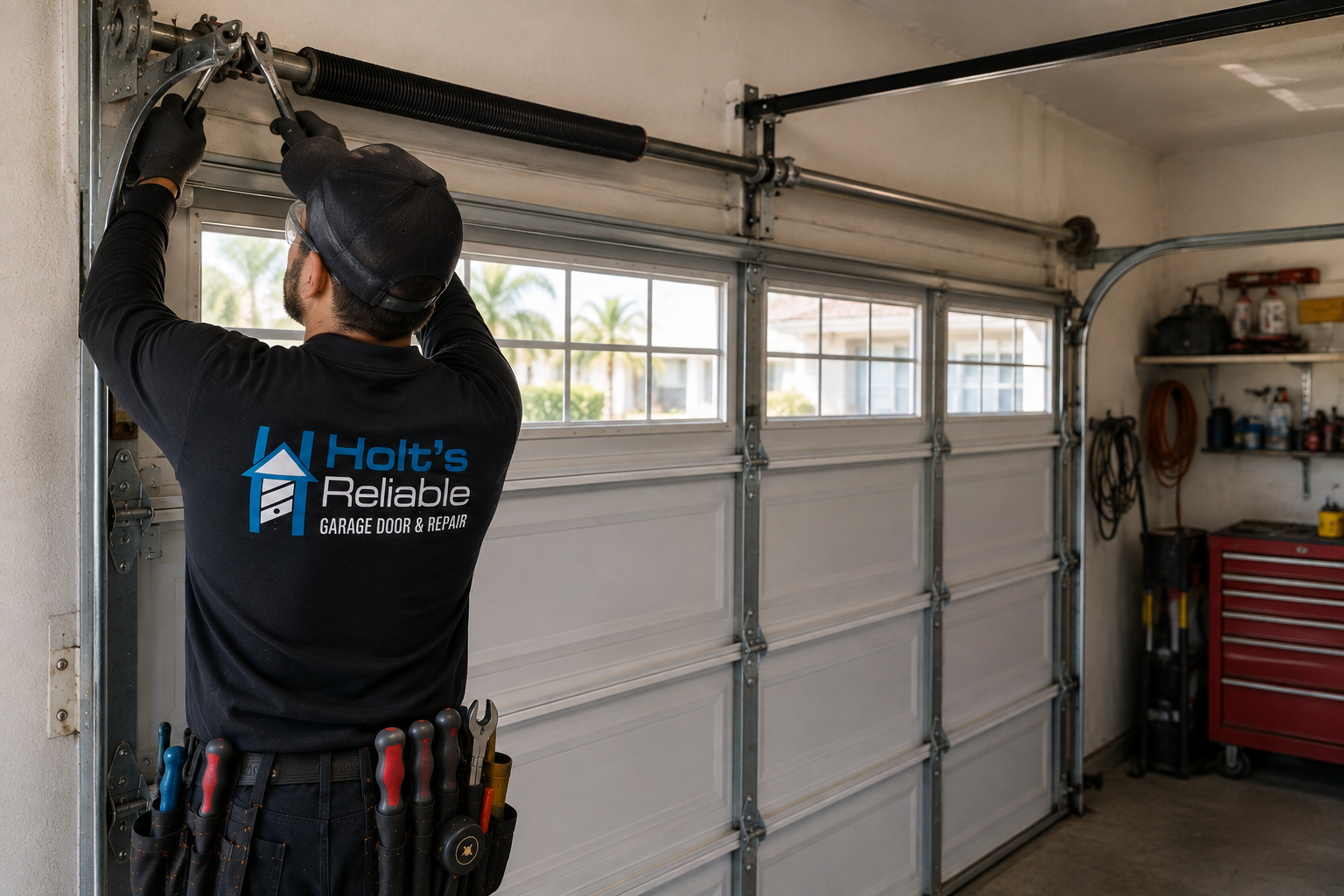
Garage Spring Replacement Frequency: A Homeowner’s Guide for the Treasure Coast
Understanding garage spring replacement frequency is essential for keeping your garage door safe, reliable, and easy to operate. For homeowners in Fort Pierce, Jensen Beach, Palm City, Martin County, and across Florida’s Treasure Coast, garage door springs work hard every day to lift and balance one of the heaviest moving systems in the home.
When springs wear out or break, your garage door can become unsafe, difficult to open, or completely inoperable. A failed spring can also place extra strain on your garage door opener, garage door cables, rollers, and tracks, leading to more expensive repairs.
At Holt’s Reliable Garage Door Repair, we help homeowners understand when garage spring replacement is needed, what warning signs to watch for, and how Florida’s coastal climate can affect spring life. This garage spring guide explains what you need to know before a garage spring failure disrupts your day.
How Often Should Garage Springs Be Replaced?
The average garage spring replacement frequency is typically every 7 to 10 years for standard residential garage door springs. However, the actual replacement timeline depends on how often you use your garage door, the type of springs installed, the weight of the door, and local environmental conditions.
Garage door springs are measured by cycles, not just years. One cycle equals each time the garage door is fully opened and closed. In general, springs are rated for about 10,000 cycles. If your garage door opens and closes four times per day, those cycles can be used up in approximately seven years.
For Treasure Coast homeowners, spring replacement frequency may be shorter because of Florida’s heat, humidity, storms, and salt air. These conditions can accelerate rust, corrosion, and metal fatigue, especially if the springs are not properly maintained.
Why Garage Spring Replacement Matters
Garage door springs do more than help your door move. They counterbalance the full weight of the door, allowing it to open smoothly and close safely. When a spring weakens, your garage door opener has to work harder, and the entire system becomes less dependable.
Timely garage spring replacement can help prevent:
Sudden garage door failure
Damage to the opener or door panels
Safety risks for your family
Emergency repair costs
Difficulty entering or securing your home
Extra wear on cables, rollers, and tracks
A proactive approach to garage spring replacement frequency helps protect your home, your garage door system, and your peace of mind.
Garage Spring Guide: What Affects Spring Replacement Frequency?
Several factors determine how often your garage springs should be replaced. This garage spring guide breaks down the most important ones.
1. Daily Garage Door Use
When a garage door opens and closes in a high frequency, the garage springs are significantly more likely to suffer premature wear. In addition, it is pretty usual that homeowners use the garage as the main entrance to the home, which can increase daily cycles significantly.
If your garage door is used multiple times each day, your spring replacement frequency may be closer to 5 to 7 years. Homes with lighter use may get closer to the full 7 to 10 years from standard garage springs.
2. Florida Heat, Humidity, and Salt Air
Treasure Coast weather can be tough on garage door components. Weather phenomenons such as high humidity levels and salt air can cause rust and corrosion, while heat and temperature changes can add stress to metal parts.
For homeowners near the coast, regular garage door inspection and garage door maintenance are especially important. Without proper care, the recommended garage spring replacement frequency may be reduced because garage springs can weaken faster in corrosive conditions.
3. Garage Door Weight
Heavier garage doors place more tension on springs. Insulated doors, wood-look doors, oversized doors, and doors with decorative windows or hardware may require stronger springs.
If springs are not properly matched to the door’s weight, they may wear out early. Professional garage spring replacement ensures the correct springs are installed for safe, balanced operation.
4. Spring Quality and Cycle Rating
Not all garage door springs are the same. Standard springs may be rated for around 10,000 cycles, while high-cycle springs can be rated for 25,000 cycles or more.
If you use your garage door very frequently, upgrading to high-cycle springs can improve long-term value and extend the time between replacements. Holt’s Reliable Garage Door Repair can help you choose the right option for your home and budget.
Common Signs You Need Garage Spring Replacement
Knowing the warning signs of worn springs can help you avoid sudden breakdowns. If you notice any of the following issues, it may be time to schedule professional garage spring replacement.
Your Garage Door Feels Heavy
If your garage door feels unusually heavy when opened manually, the springs may no longer be providing proper support. This is one of the most common signs that replacement may be needed.
The Door Opens Unevenly
A door that rises unevenly or appears crooked may have unequal spring tension or a broken spring on one side. This can create additional stress on the entire garage door system.
You Hear a Loud Bang
A broken spring often makes a loud snapping or banging sound. Many homeowners describe it as sounding like something hit the garage. If this happens, do not attempt to operate the door.
Visible Gap in the Spring
When broken, torsion springs usually show a visible gap. If you see a separation in the spring coil, the spring has failed and should be replaced by a garage door trained technician.
The Door Stops Midway or Reverses
A garage door that stops during operation or reverses unexpectedly may be struggling with spring tension. This can also affect garage door opener performance and safety sensors.
Rust or Corrosion Is Visible
Rust weakens garage springs over time. In humid areas like Fort Pierce, Jensen Beach, Palm City, and Martin County, corrosion is a common reason for shorter spring replacement frequency.
Torsion Springs vs. Extension Springs
In this garage spring guide we also explain the two most common garage door spring types: torsion springs and extension springs.
Torsion Springs
These components are mounted horizontally right over the garage door opening. They work by twisting to store and release energy as the door opens and closes. These springs are commonly used on modern garage doors because they provide smoother, safer, and more balanced operation.
In general, torsion springs have a longer lifespan than extension springs when properly maintained and matched to the door.
Extension Springs
These components can be found along the sides of the garage door tracks. They stretch and contract during operation. While they are common on some older systems, they may require more frequent replacement than torsion springs.
Whether your system uses torsion or extension springs, professional garage spring replacement is recommended because both types operate under high tension.
Why You Should Not Replace Garage Springs Yourself
Garage door springs are under extreme tension. Attempting DIY garage spring replacement can lead to serious injury, property damage, or improper installation.
A professional garage door technician has the tools, training, and experience to identify the correct spring size, safely remove old springs, install properly rated replacement springs, balance the garage door, inspect related parts and test the system for safe operation
Holt’s Reliable Garage Door Repair provides professional spring replacement services throughout the Treasure Coast, helping homeowners avoid the risks of DIY repairs.
How to Extend the Life of Your Garage Springs
While springs will eventually need replacement, proper garage door maintenance can help improve performance and extend service life.
Lubricate the Springs
Use a garage door-safe lubricant to reduce friction and help protect springs from rust. This is especially useful in humid and coastal environments.
Schedule Routine Inspections
Regular inspections can identify rust, gaps, loose hardware, worn cables, and other issues before they become urgent problems.
Keep Tracks Clean and Aligned
Dirty or misaligned tracks can make your garage door work harder. When the door does not move smoothly, springs may experience extra strain.
Address Door Problems Early
Damaged garage door panels, worn rollers, loose garage door cables, or garage opener issues can affect spring performance. Repairing small problems early can help reduce stress on the springs.
When Should Treasure Coast Homeowners Schedule Garage Spring Replacement?
If your springs are approaching 7 to 10 years old, showing rust, making unusual noises, or causing uneven door movement, it is time to schedule an inspection. The best approach is to replace springs before they fail completely.
Understanding garage spring replacement frequency allows you to plan ahead, avoid emergency service calls, and keep your garage door operating safely. For homeowners who use the garage as the primary entrance, a proactive replacement schedule is especially important.
Schedule Professional Garage Spring Replacement Today
Do not wait for a broken spring to leave your garage door stuck, unsafe, or difficult to use. Holt’s Reliable Garage Door Repair provides trusted garage spring replacement services for homeowners in Fort Pierce, Jensen Beach, Palm City, Martin County, and surrounding Treasure Coast communities.
Our experienced team can inspect your springs, explain your options, and recommend the right replacement solution for your garage door system. Whether you need standard springs, high-cycle springs, or a full system inspection, we are here to help.
Contact Holt’s Reliable Garage Door Repair today to schedule your garage spring inspection or replacement service. In addition, you can call us at (772) 999-1125 and follow us on our social media profiles on Facebook, Youtube, Instagram and TikTok for more garage door tips, repair updates, and helpful homeowner advice: