Learning how to paint a garage door can give one of the largest exterior surfaces on your home a cleaner, more updated appearance without immediately replacing the entire door. For homeowners in Port St. Lucie, Stuart, Jensen Beach, Saint Lucie County, and Indian River County, careful surface preparation and exterior-grade products matter because a garage door is constantly exposed to sun, moisture, rain, and changing weather conditions.
Painting can be a practical improvement when the door itself is structurally sound. However, never treat paint as a solution for mechanical or structural problems. Evaluate rust damage, cracked panels, failing hinges, damaged cables, or operating problems before you start painting.
Holt's Reliable Garage Door & Repair is a locally owned and family-operated business with over 20 years of experience serving homeowners across the Treasure Coast. We specialize in garage door and opener repairs, replacements, and routine maintenance, delivering exceptional service and honest estimates to ensure your door is in top condition before you revamp it.
Painting Prep Steps Before You Begin
Good painting prep steps strongly influence how well the new coating adheres and how the finished door looks. Painting directly over dirt, loose paint, oxidation, or untreated rust can cause peeling, bubbling, and uneven coverage.
Start by inspecting the entire garage door in daylight. Look for rust, flaking coatings, dents, damaged panels, loose hardware, and areas where moisture may have affected the surface. Wash the exterior thoroughly to remove dirt, dust, grease, and other contaminants, and allow it to dry.
Remove loose or peeling paint and lightly sand appropriate surfaces to create a better base for the new coating. Rusted metal areas require particular attention. Remove loose corrosion and apply a rust-inhibitive primer to exposed metal where appropriate.
Protect handles, trim, windows, weather seals, and adjacent surfaces with painter's tape and coverings. Never paint moving hardware simply to improve its appearance. Springs, rollers, cables, tracks, hinges, and other operating components need to move correctly and should remain free of coatings that could interfere with their function.
If you notice a mechanical problem during preparation, consider scheduling professional garage door service and repairs before continuing.
Garage Door Paint Types and Primer Selection
Choosing the right garage door paint type starts with identifying your door's material and existing finish. Exterior coatings are designed to withstand weather exposure, but the correct product still depends on whether you are working with metal, wood, or another manufacturer-approved surface.
For previously painted metal doors, a quality exterior coating compatible with metal is generally appropriate after adequate cleaning and preparation. Bare metal and areas where you've removed rust benefit from a compatible rust-inhibitive primer. An exterior bonding or multi-surface primer can also improve adhesion when the existing surface requires it.
When learning how to paint a garage door, you'll also find that wood garage doors have different needs. Bare or exposed wood generally requires an exterior primer compatible with both the substrate and finish coat. Follow the paint and garage door manufacturers' recommendations rather than assuming that one product works equally well on every material.
Some premium exterior products combine paint and primer. Even then, dedicated primer remains particularly valuable on bare, repaired, or rust-affected surfaces. Follow the coating manufacturer's drying and recoating instructions instead of relying on a universal drying time.
How to Paint a Garage Door Step by Step
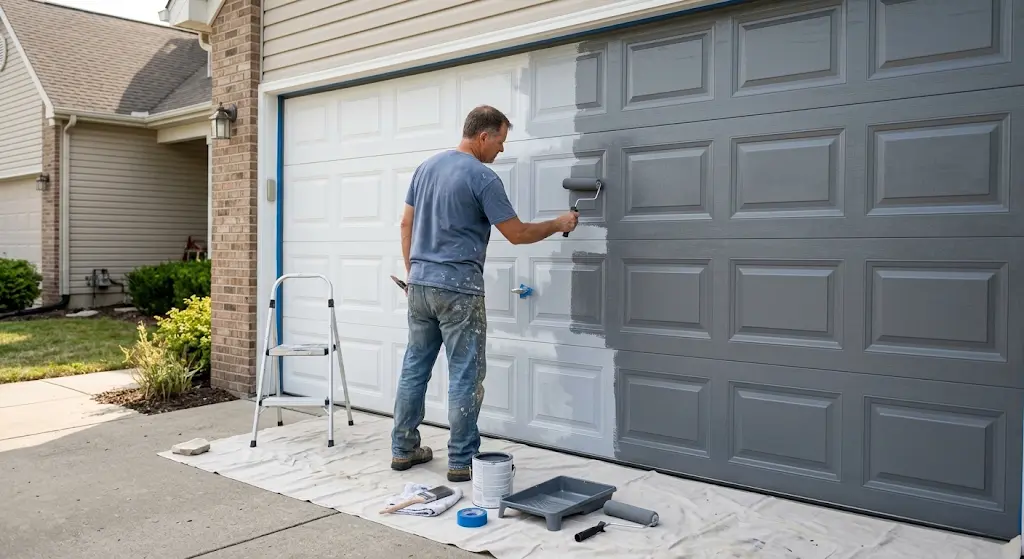
Once preparation and priming are complete, the actual process of how to paint a garage door becomes much more straightforward.
A 2- to 2.5-inch nylon/polyester brush can help reach recessed panels, corners, grooves, and detailed sections. A roller with an appropriate nap provides efficient coverage across larger flat areas. A sprayer can create a smooth finish, but proper masking and application technique are essential.
Begin with detailed or recessed areas, working the coating into corners and grooves with the brush. Then cover the larger flat surfaces with your roller or sprayer. Work systematically so you maintain a wet edge and avoid visible lap marks.
Start with the upper sections and progress through the door in manageable areas. Depending on the door design, carefully repositioning it can make lower panels easier to reach. Avoid allowing freshly painted sections to stick to weather stripping or adjacent panels.
Apply smooth, overlapping strokes and resist the temptation to make one coat excessively heavy. Allow the first coat to dry according to the product instructions before applying another coat, if needed, for consistent color and coverage.
After the final coat, carefully remove painter's tape while appropriate for the coating being used. Allow sufficient drying and curing time, usually 24 hours, before normal operation or reinstalling removed decorative hardware.
Common Mistakes When Painting a Garage Door
One of the biggest mistakes homeowners make when learning how to paint a garage door is treating it like an ordinary wall-painting project. A garage door is both an exterior surface and a moving system, so you can't consider appearance separately from operation.
Do not paint over active rust, loose coatings, dirt, or moisture. Avoid coating weather seals or operational components. Painting springs, cables, rollers, and tracks can interfere with movement and make future inspection more difficult.
Color choice also deserves consideration. Before making a significant color change, review the recommendations for your particular door and coating system. Manufacturer requirements should take priority over general design advice.
Most importantly, don't use painting to conceal deterioration. If your inspection reveals damaged hinges, cables, panels, or other components, professional garage door repairs may be more important than applying another coat of paint.
Repaint vs. Replace: Which Makes More Sense?
The repaint vs. replace decision depends on more than appearance. Repainting makes the most sense when the garage door operates properly, and the primary concerns are faded color, minor surface wear, or an outdated exterior finish.
Replacement becomes worth considering when cosmetic deterioration comes with bigger problems. Extensive corrosion, significant panel damage, repeated repairs, or a door that no longer meets the home's needs can make a garage door replacement more practical than repeatedly improving its appearance.
A damaged individual section may not always require a completely new door. Depending on the condition and design, you may be able to replace only the panel.
Separate cosmetic condition from functional condition when making this decision. Fresh paint can dramatically change appearance, but it cannot restore a compromised spring, repair a frayed cable, straighten serious structural damage, or correct an unreliable opener.
Maintaining Your Newly Painted Garage Door
After learning how to paint a garage door, routine care can help protect both its appearance and operation. Keep the exterior reasonably clean and periodically check for chips, peeling, corrosion, or other areas where the coating has been compromised.
Also, pay attention to how the door moves and sounds. Unusual noises, jerky movement, imbalance, or changes in opening and closing behavior may indicate a mechanical issue rather than a paint problem.
Following essential garage door maintenance tips can help you recognize developing concerns before they become more disruptive. Professional garage door tune-ups can also address the operating system separately from your cosmetic maintenance.
Never attempt high-tension component repairs as part of a painting project. Garage door springs and cables can present serious hazards and are better left to trained technicians.
Professional Garage Door Help Across the Treasure Coast
If preparation reveals more than faded paint, Holt's Reliable Garage Door & Repair can help determine whether the door needs maintenance, repair, rebuilding, or replacement. Our locally owned and operated company serves the entire Treasure Coast and works with garage doors, openers, springs, cables, hinges, screens, keyless-entry systems, and related equipment.
If you're considering a larger upgrade, explore professional garage door installation; for doors with operational problems, we can evaluate them through garage door safety inspection services.
For homeowners in Port St. Lucie, Stuart, Jensen Beach, Saint Lucie County, and Indian River County, knowing when a garage door needs more than paint is key to responsible maintenance. A sound door with a tired finish may be an excellent candidate for repainting. A door with structural or mechanical deterioration deserves professional attention first.
For an evaluation, contact Holt's Reliable Garage Door & Repair to discuss your garage door's condition and available service options.
Follow us on social media to see our projects across the Treasure Coast and learn more about our services: Facebook, YouTube, Instagram, and TikTok.