
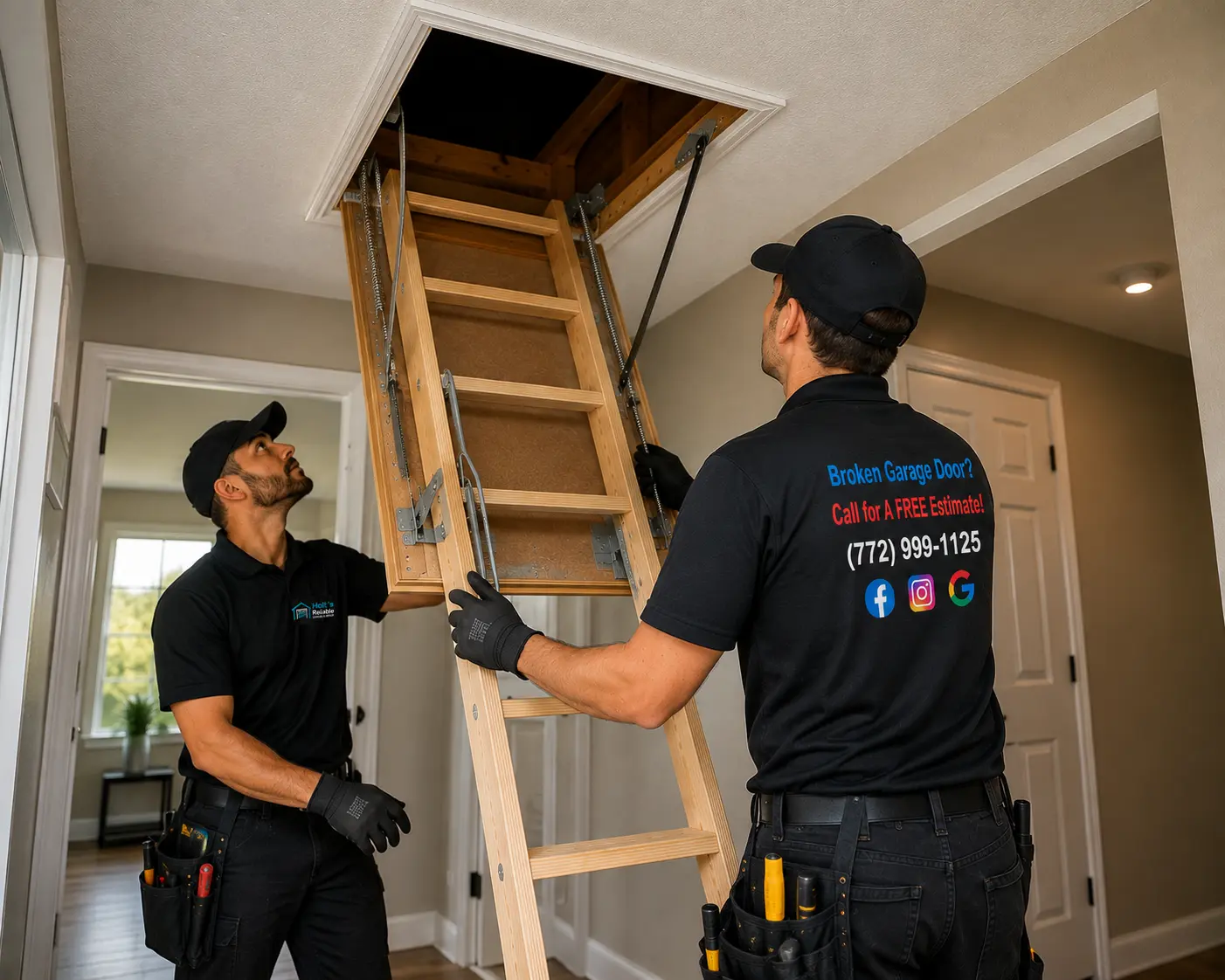
Coastal air patterns moving inland across Saint Lucie County bring consistent moisture exposure that affects every mechanical component in residential attic access systems. Homeowners throughout the region often discover that what started as minor stiffness in their fold-down stairs gradually becomes a safety concern—hinges resist movement, wooden treads develop soft spots, and the entire assembly feels unstable during use. These aren't isolated mechanical failures. They're interconnected performance issues that develop when environmental conditions accelerate normal wear patterns, and they require the kind of technical restoration approach we've refined over two decades serving this community. Professional attic stairs installation and repair addresses not just the visible symptoms but the underlying structural and mechanical factors that determine long-term reliability.
Restoration Solutions for Complete System Performance
Structural Assessment and Component Replacement
The wooden framework supporting most attic stair systems absorbs moisture differently depending on installation location and ventilation patterns. We assess load-bearing capacity across all attachment points, examining how the frame connects to ceiling joists and whether previous installations created stress concentrations that compromise structural integrity. When replacement becomes necessary, we source materials appropriate for Florida's humidity levels and ensure proper sealing that protects against future moisture infiltration. This foundation work determines whether the entire system operates safely under repeated use.
Hardware Restoration and Mechanical Adjustment
Spring mechanisms lose calibrated tension as metal fatigues and corrosion develops on pivot points. Our attic stair repair process includes complete hardware evaluation—measuring spring resistance, examining hinge condition, and testing locking mechanisms that secure the stairs in both open and closed positions. We replace corroded fasteners with stainless steel alternatives, lubricate all moving components with marine-grade compounds that resist moisture, and adjust tension settings so the stairs operate smoothly without requiring excessive force. These mechanical refinements directly affect both safety and long-term durability.
Tread Stability and Surface Integrity
Individual treads experience concentrated stress with every use, and wooden steps exposed to attic heat cycles develop dimensional changes that affect stability. We inspect each tread for structural soundness, looking for compression damage, edge deterioration, or surface wear that creates slip hazards. Replacement treads receive proper reinforcement and non-slip surfacing appropriate for residential applications. This attention to walking surface quality matters especially in homes where attic access occurs frequently for storage or mechanical system maintenance.
Insulation Integration and Seal Performance
The attic door itself functions as part of your home's thermal envelope. Gaps around the closed assembly allow conditioned air to escape while introducing humidity into attic spaces—a particular concern in Saint Lucie County where cooling costs directly reflect seal quality. We evaluate weatherstripping condition, assess insulation attachment, and ensure the door closes flush against the frame without gaps. Proper integration reduces energy waste and prevents the moisture transfer that accelerates wood deterioration throughout the entire stair assembly.
When system performance declines to the point where safety concerns emerge or operation becomes unreliable, professional evaluation provides clarity about whether restoration or complete replacement delivers better long-term value for your specific situation.
Environmental Factors Affecting Local Performance
Coastal Moisture and Material Degradation
Salt content in air masses moving across Saint Lucie County from the Atlantic doesn't just affect exposed metal surfaces—it influences how protective coatings break down and how quickly corrosion establishes itself on hardware components. Homes within several miles of the coast face accelerated deterioration timelines compared to properties farther inland. Our attic ladder service accounts for these locational differences, applying protective treatments and selecting materials that match the specific environmental exposure your property experiences.
Heat Cycling and Dimensional Changes
Attic temperatures in Florida regularly exceed 140 degrees during summer months, creating expansion forces on wooden components and metal hardware alike. As materials cool overnight, contraction occurs at different rates depending on composition—wood versus metal, fastener versus frame. These daily cycles gradually loosen connections and create the operational stiffness that homeowners notice over time. Understanding how thermal stress accumulates allows us to reinforce vulnerable connection points and anticipate where future maintenance needs will likely develop.
Technical Restoration Process
Comprehensive System Evaluation
Effective restoration begins with understanding current condition across all system components. We document tread integrity, measure spring tension, assess frame attachment quality, and test locking mechanism function. This diagnostic phase identifies which elements require immediate attention versus those that need monitoring during future service intervals. Homeowners receive clear documentation of findings with practical recommendations based on actual component condition rather than arbitrary replacement schedules.
Coordinated Implementation
Restoration work follows logical sequencing—structural repairs precede hardware replacement, mechanical adjustments occur after new components install, and final testing validates that all elements function as an integrated system. We protect surrounding areas during work, manage material staging to minimize disruption, and coordinate installation timing around household schedules. The process emphasizes thoroughness over speed, ensuring each restoration step properly supports long-term reliability.
Performance Validation and Documentation
Completed installations undergo full operational testing under load conditions that simulate actual use. We verify smooth operation through complete opening and closing cycles, confirm locking mechanisms engage properly, and validate that safety features function as designed. Homeowners receive documentation of work performed, materials installed, and recommended maintenance practices that extend system lifespan. This final validation ensures the restored system meets professional standards rather than just appearing functional.
Two Decades of Local Technical Experience
Holt's Reliable Garage Door & Repair has built our reputation throughout Saint Lucie County by approaching every project with the same commitment to thorough workmanship and transparent communication. Twenty years in this community means we understand how local conditions affect system performance, which installation approaches prove most durable over time, and what homeowners should realistically expect from properly maintained attic access systems. We warranty our work because we're confident in the quality of materials we install and the technical methods we employ. That confidence comes from experience with hundreds of residential applications across varied property types and installation scenarios. Our team maintains professional standards not because regulations require it, but because reliable long-term performance depends on doing the foundational work correctly from the start.
Practical Guidance for Homeowners
Recognizing Performance Decline
Most attic stair problems develop gradually rather than appearing suddenly. Early indicators include increased resistance when opening or closing, visible gaps around the door when closed, creaking sounds from hinges or springs, and minor movement in treads during use. These symptoms signal that mechanical components are experiencing stress that will accelerate if left unaddressed. Some homeowners question whether professional attic stair installation makes financial sense compared to continued use of a declining system, but safety considerations and potential structural damage from delayed maintenance usually justify timely restoration. The cost difference between addressing problems early versus waiting for complete failure often surprises homeowners who assumed repairs would be more expensive than they prove to be.
Installation Versus Repair Decision Factors
Determining whether existing stairs warrant restoration or replacement depends on frame condition, the extent of wood deterioration, and whether hardware components remain serviceable. Systems showing isolated problems—perhaps corroded springs or worn weatherstripping—typically benefit from targeted repair that costs substantially less than complete replacement. Conversely, stairs with compromised structural framing, extensive tread damage, or outdated designs that lack modern safety features often make better candidates for new installation. We assess these factors objectively during evaluation, presenting options with clear explanations of what each approach delivers. Homeowners make better decisions when they understand not just cost differences but the functional and longevity implications of each path forward.
Material Selection and Climate Considerations
Florida's environment demands material choices that account for moisture exposure and temperature extremes. Aluminum attic stairs resist corrosion better than steel alternatives but require proper insulation integration to prevent thermal bridging. Wooden stairs offer aesthetic appeal and can provide excellent service life when properly sealed and maintained, though they demand more attention in humid climates. Composite materials present another option with performance characteristics between wood and metal. The right choice for your home depends on usage patterns, budget parameters, and how the attic access location experiences environmental exposure. These aren't decisions with universal correct answers—they're property-specific choices that benefit from experienced technical input.
Maintenance Practices That Extend System Lifespan
Regular attention to simple maintenance tasks significantly extends the service life of attic stair systems. Lubricating hinges and springs annually with appropriate moisture-resistant compounds prevents corrosion and maintains smooth operation. Inspecting weatherstripping for compression damage and replacing it when gaps appear preserves energy efficiency and protects wooden components from moisture exposure. Tightening hardware fasteners that gradually loosen from vibration and use prevents play in the assembly that accelerates wear. These straightforward practices take minimal time but prevent the kinds of neglect-related deterioration that eventually require extensive restoration. For homeowners uncertain about proper maintenance procedures or concerned about current system condition, periodic professional assessment provides valuable guidance and catches developing problems before they compromise safety or require emergency intervention.
Dependable Service Throughout Saint Lucie County
Whether your property sits in Port St. Lucie's established neighborhoods, along the waterfront areas where salt exposure accelerates wear, or in the inland communities where ventilation patterns affect moisture levels, we bring the same commitment to quality workmanship and honest technical guidance. Our service area covers the full county because we've built relationships with homeowners who value reliability over shortcuts and who expect their service providers to deliver what they promise. When your attic access system needs professional attention—whether for comprehensive restoration, new installation, or technical assessment of current condition—contact us for straightforward evaluation and clear recommendations. We'll explain what your system needs, why those specific services matter for long-term performance, and what you should expect from properly executed work. That clarity helps homeowners make confident decisions about maintaining one of their home's frequently overlooked but genuinely important access systems.