
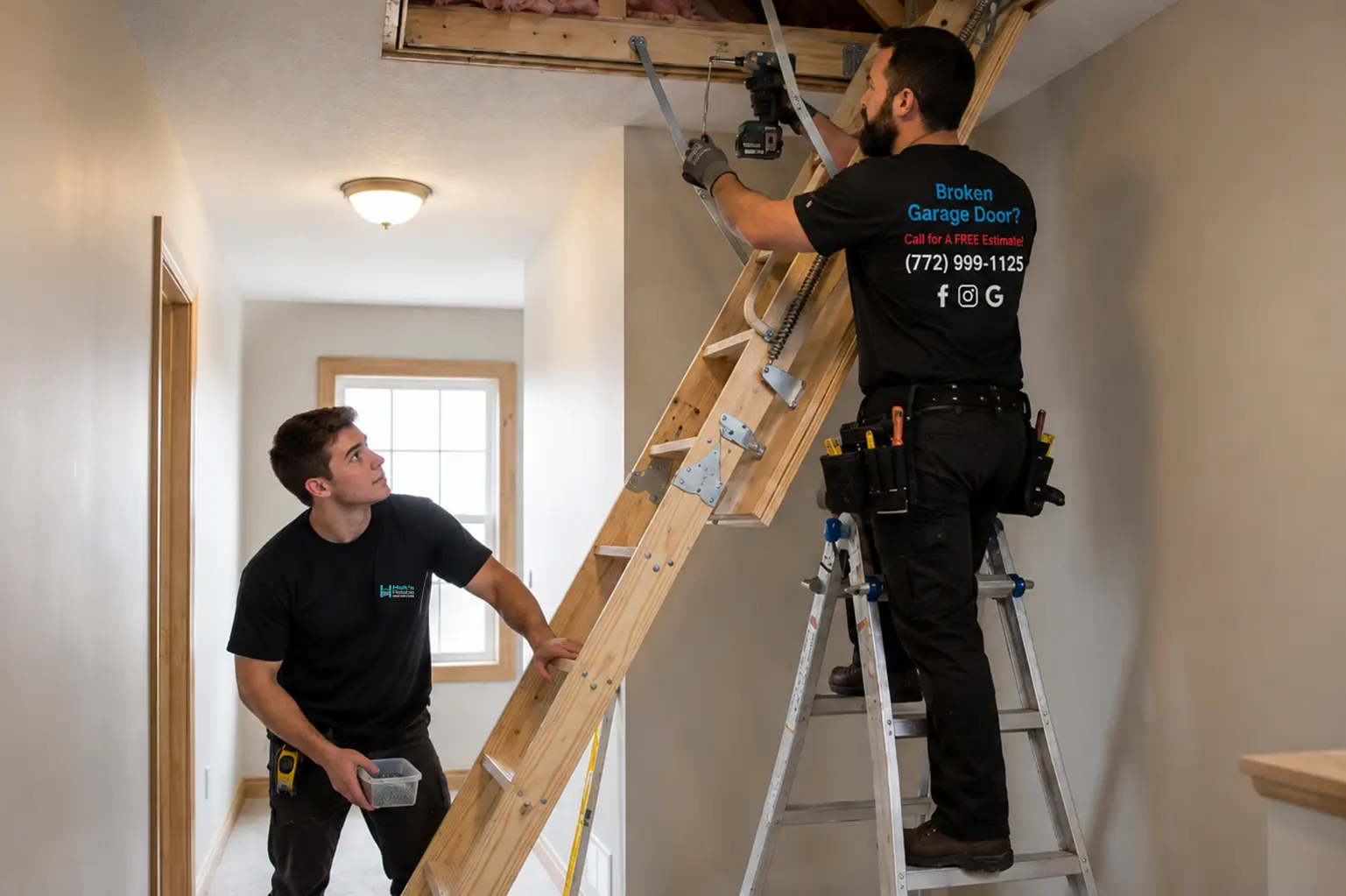
Across Martin County, the combination of coastal humidity and seasonal temperature swings creates ongoing challenges for attic access systems that many homeowners don't anticipate until problems surface. When moisture settles into wooden ladder sections or corrodes the spring mechanisms that balance pull-down systems, what seemed like a minor inconvenience can become a genuine safety concern. Over the past two decades, we've seen how Florida's environmental conditions accelerate wear on attic stair components, particularly in older homes where original installations never accounted for the region's aggressive climate patterns. Professional attic stairs installation and repair addresses these vulnerabilities through proper material selection, corrosion-resistant hardware, and structural integration that withstands both humidity exposure and the operational stress of daily use. Whether you're dealing with a ladder that no longer latches securely or planning a new installation that requires precise ceiling modifications, understanding how these systems interact with your home's structure makes the difference between temporary fixes and lasting reliability.
Restoration Solutions for Attic Access Systems
Every attic stair system—whether a telescoping ladder, folding staircase, or sliding mechanism—relies on interconnected components that must function in precise coordination. When one element fails, the entire system's balance deteriorates rapidly. Our attic stair installation process begins with structural assessment of ceiling joists and framing, ensuring adequate load-bearing capacity before mounting hardware. For existing systems, we evaluate spring tension calibration, hinge wear patterns, and frame alignment to identify why performance has degraded.
Complete System Installation
New installations require careful coordination between ceiling penetration, insulation management, and structural reinforcement. We measure rough openings to manufacturer specifications, install support headers where ceiling joists need redistribution, and integrate weather-stripping that maintains your home's thermal envelope. The goal isn't just functional access—it's creating a system that operates smoothly while preserving energy efficiency and structural integrity.
Spring Mechanism Restoration
The counterbalance springs that make pull-down ladders effortless to operate lose tension over time, particularly when exposed to temperature fluctuations in unconditioned attic spaces. We replace worn springs with corrosion-resistant components rated for Florida's climate, adjusting tension to match your specific ladder's weight distribution. This restoration eliminates the strain that makes opening attic access difficult and prevents the sudden drops that create safety hazards.
Structural Frame Repair
Wood frames that support attic stairs often develop stress fractures or moisture damage where they contact ceiling drywall. We assess whether reinforcement can restore integrity or if frame replacement becomes necessary, then integrate new components with existing ceiling structure to eliminate movement and ensure the system mounts solidly. This work often involves coordination with insulation contractors when attic access modifications affect your home's energy barriers.
Hardware and Hinge Replacement
Folding ladder sections depend on hinges that experience constant flexing stress with every opening and closing cycle. When coastal humidity corrodes these pivot points, the ladder becomes difficult to extend or may collapse unexpectedly. We replace deteriorated hardware with marine-grade alternatives and lubricate moving components with penetrating products designed for high-humidity environments, extending operational life significantly.
Latch and Lock System Adjustment
Proper latching keeps your attic access sealed when not in use, maintaining both security and climate control. Misaligned latches often indicate frame movement or hinge wear, so we address underlying causes rather than simply adjusting catch positions. For homes requiring enhanced security, we install reinforced locking mechanisms that integrate with existing systems without compromising ease of operation.
If your attic access shows signs of operational difficulty or structural concern, reach out for a technical assessment that identifies exactly what restoration your system requires.
Understanding Martin County's Impact on Attic Access
The environmental conditions throughout Martin County create specific challenges that generic attic ladder installations fail to anticipate. Coastal proximity means salt particles carried by prevailing winds settle on every exposed surface, including the metal components inside your attic space. Combined with humidity levels that regularly exceed 70 percent, this creates an environment where standard steel hardware develops surface corrosion within months rather than years.
Climate-Driven Material Degradation
Wood components absorb moisture during Florida's humid summers, then contract when air conditioning cycles dry indoor spaces. This constant dimensional change loosens fasteners, creates gaps in weather-stripping, and eventually leads to structural movement that affects how smoothly your attic stairs operate. We account for this expansion and contraction during installation, using fastening techniques and materials that accommodate movement without compromising stability.
Temperature Differential Stress
The temperature difference between conditioned living spaces and unconditioned attics—often 30 to 40 degrees—places continuous stress on the seal where your attic access meets the ceiling. Poor initial installation or degraded insulation allows conditioned air to escape, increasing energy costs while creating moisture accumulation that accelerates component wear. Our restoration work addresses these thermal boundaries with proper insulation dams and upgraded weather-stripping that maintains your home's climate control integrity.
Professional Assessment and Restoration Process
Effective attic stair repair begins with understanding why the system fails rather than simply addressing visible symptoms. We start with operational testing—opening and closing the ladder multiple times to observe how components interact and where resistance or unusual movement occurs. This reveals whether problems stem from spring tension, structural misalignment, or hardware deterioration.
Structural Evaluation
We examine ceiling framing around the attic access opening, checking for adequate support and identifying any modifications previous installers made that compromise structural integrity. For installations requiring new rough openings, we coordinate with the ceiling structure to ensure load paths remain continuous and weight distributes properly across remaining joists.
Component-Level Diagnostics
Each moving part receives individual assessment—springs for proper tension and corrosion, hinges for wear and alignment, latches for secure engagement, and frame-to-ceiling contact points for gaps or movement. This systematic approach identifies every element requiring attention, preventing the common scenario where repairing one component simply shifts stress to another weak point that fails shortly afterward.
Integrated Restoration
Once we've identified all deficiencies, we coordinate repairs to restore the entire system simultaneously. This might involve frame reinforcement, spring replacement, hinge restoration, and weather-stripping upgrades completed together so the system functions as an integrated whole rather than a collection of independently repaired parts. We test operation under loaded conditions, ensuring the ladder extends and retracts smoothly while latches engage securely.
Two Decades of Local Technical Experience
Since establishing operations in Florida 20 years ago, we've developed expertise specifically relevant to how Martin County's environment affects attic access systems. That experience informs everything from material selection to installation techniques that account for seasonal humidity swings and coastal exposure. We've seen which shortcuts create problems years later and understand why proper installation costs less over time than repeated attempts to correct inadequate initial work.
Our approach prioritizes transparency—explaining what your system actually needs versus what might provide temporary improvement, discussing realistic timelines for component longevity given local conditions, and ensuring you understand maintenance practices that extend operational life. We warranty both our installation work and the components we install, standing behind the technical quality that comes from understanding this specific region's demands on attic access systems.
Practical Guidance for Martin County Homeowners
Many homeowners don't realize their attic ladder service needs extend beyond basic operation until safety concerns emerge. Understanding when DIY maintenance makes sense versus when professional intervention becomes necessary protects both your investment and your household's safety. If you notice your attic stairs require increasing effort to pull down or push closed, that's typically the first indicator that spring tension has degraded. Left unaddressed, this imbalance places stress on hinges and frame mounting points, accelerating wear throughout the system. While you might manage to muscle the ladder open today, the underlying mechanical deterioration will eventually create situations where the ladder drops suddenly or refuses to latch properly—both genuine safety hazards.
Recognizing Structural Concerns
Movement around the attic access frame when you open or close the ladder indicates the mounting system has loosened or the ceiling structure itself has shifted. This goes beyond simple operational inconvenience—it suggests your home's framing may need reinforcement before the attic access can function safely. We frequently discover that previous installers cut ceiling joists without adding proper headers, creating flex that worsens over time. Addressing these structural issues requires carpentry coordination that ensures load paths remain intact and the weight of stored items doesn't stress compromised framing.
Material Selection for Coastal Environments
If you're planning new attic access installation, material choices significantly affect long-term durability in Martin County's climate. Aluminum ladders resist corrosion better than steel but may not provide adequate load capacity for heavier users or frequent material transport. Wood ladders offer strength but require marine-grade finishes to prevent moisture absorption. We help homeowners balance these factors based on how they actually use their attic space—occasional holiday decoration storage demands different specifications than regular access for HVAC maintenance or workshop use.
Insulation and Energy Efficiency Integration
Your attic access creates a necessary penetration in your home's thermal barrier, which means proper installation must address insulation continuity. Building codes require insulated covers or integrated insulation systems that maintain R-value across the access opening. During restoration work, we often discover original installations that ignored these requirements, creating energy loss that costs homeowners hundreds annually in increased cooling expenses. Our comprehensive service approach treats attic access as part of your home's overall envelope system, not just a mechanical ladder that needs to fold properly.
Maintenance Practices That Extend System Life
Between professional service visits, homeowners can take simple steps that significantly extend component longevity. Lubricating hinges and pivot points twice yearly with penetrating oil designed for humid environments reduces friction wear and prevents corrosion development. Checking that weather-stripping remains intact and compressed ensures your thermal barrier stays effective. Periodically tightening visible fasteners—particularly the bolts that secure the frame to ceiling joists—prevents the gradual loosening that eventually requires more extensive repair. These practices don't replace professional assessment when operational problems develop, but they do maximize the interval between service needs.
When you're ready for a thorough evaluation of your attic access system or need to discuss installation options that suit Martin County conditions specifically, Holt's Reliable Garage Door & Repair brings the technical expertise and local experience that ensures reliable, safe attic access for years ahead.
Schedule Your Attic Access Assessment
Whether you're addressing an existing system that no longer operates safely or planning new installation that requires structural coordination, professional evaluation provides the foundation for reliable attic access. Throughout Martin County, homeowners trust our two decades of local experience to deliver technically sound solutions that account for Florida's demanding coastal environment. We'll assess your specific situation, explain exactly what restoration or installation your home requires, and complete the work with attention to both immediate function and long-term durability. Contact us today at our scheduling page to arrange your consultation and restore confidence in your attic access system.